Demond Melancon
Big Chief Demond Melancon invited to Biennale Arte 2026 by Koyo Kouoh






Born
September 20, 1978
New Orleans, LA
Years Masking
1992-Present
Tribe
Young Seminole Hunters
Lower Ninth Ward, New Orleans
US Exhibits
Birmingham, AL
Cupertino, CA
Miami, FL
Atlanta, GA
Chicago, IL
New Orleans, LA
Berkshires, MA
Kalamazoo, MI
Philadelphia, PA
Princeton, NJ
Brooklyn, NY
New York, NY
Toledo, OH
Charleston, SC
International Exhibits
Berlin, Germany
London, England
Sydney, Australia
Venice, Italy
Fashion Collaborations
Denim Tears x Levi’s® Season 4
Denim Tears x Ugg
About the Artist
Big Chief Demond Melancon invited to the 61st International Art Exhibition of La Biennale di Venezia by Koyo Kouoh
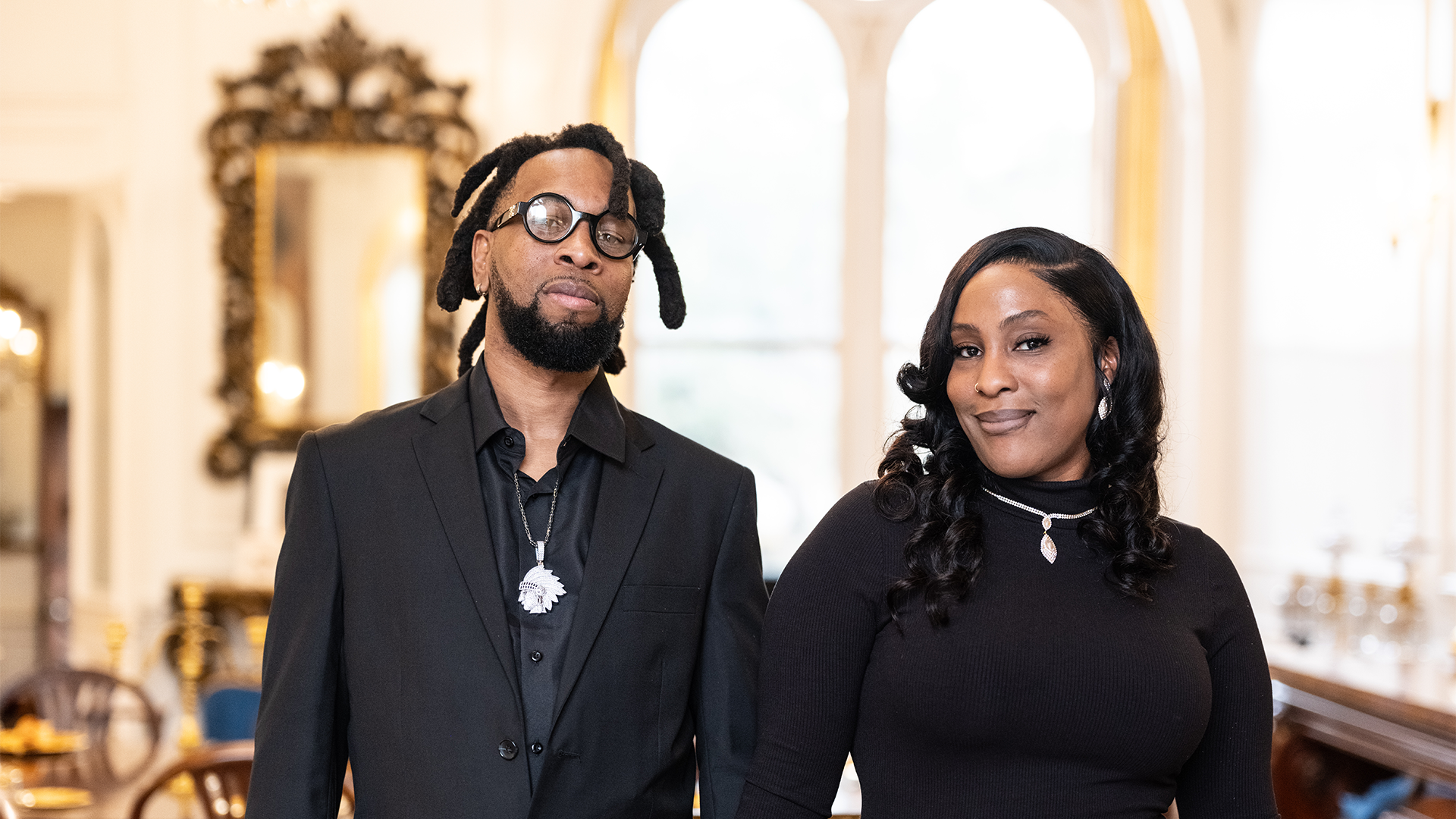
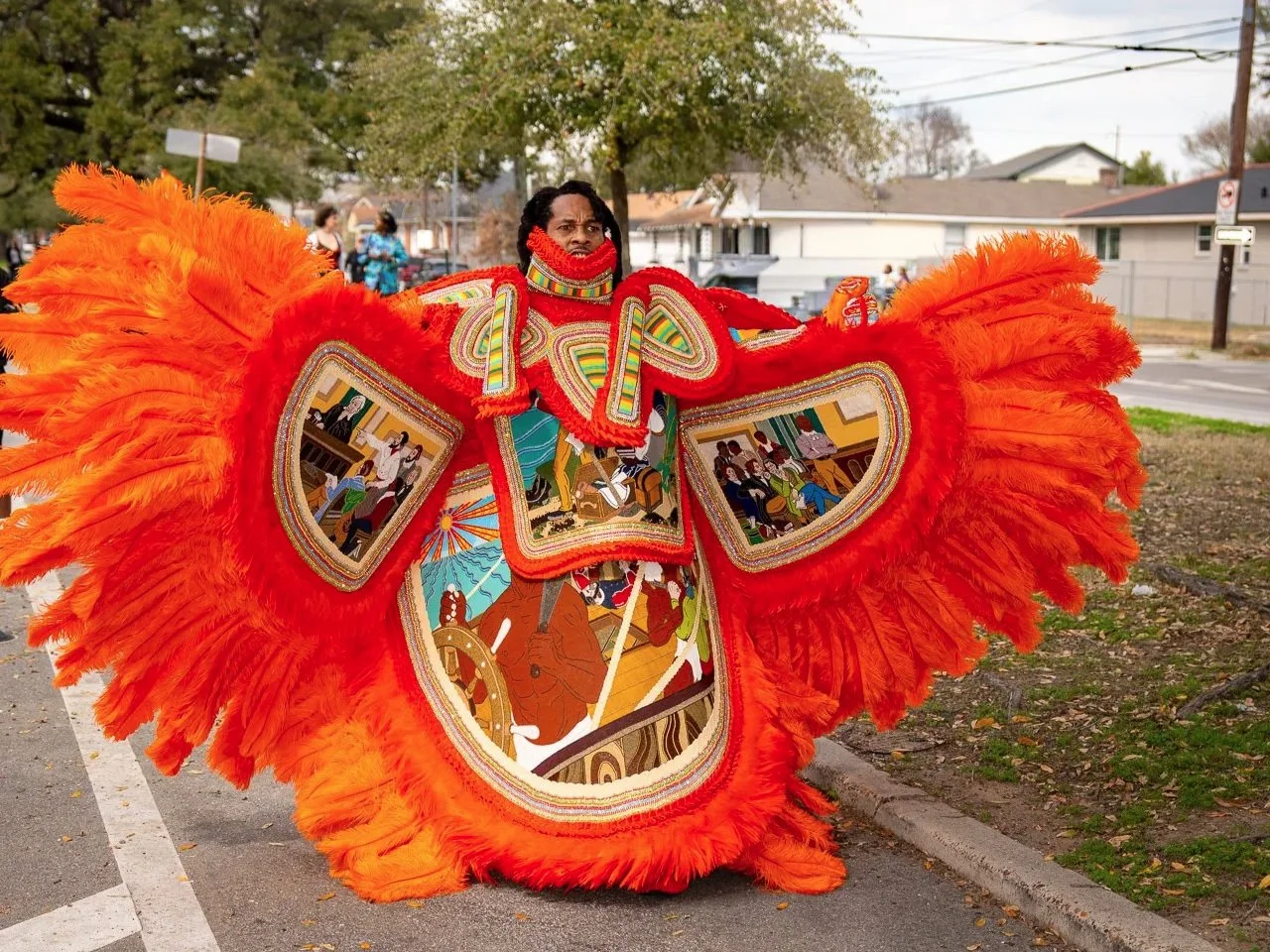
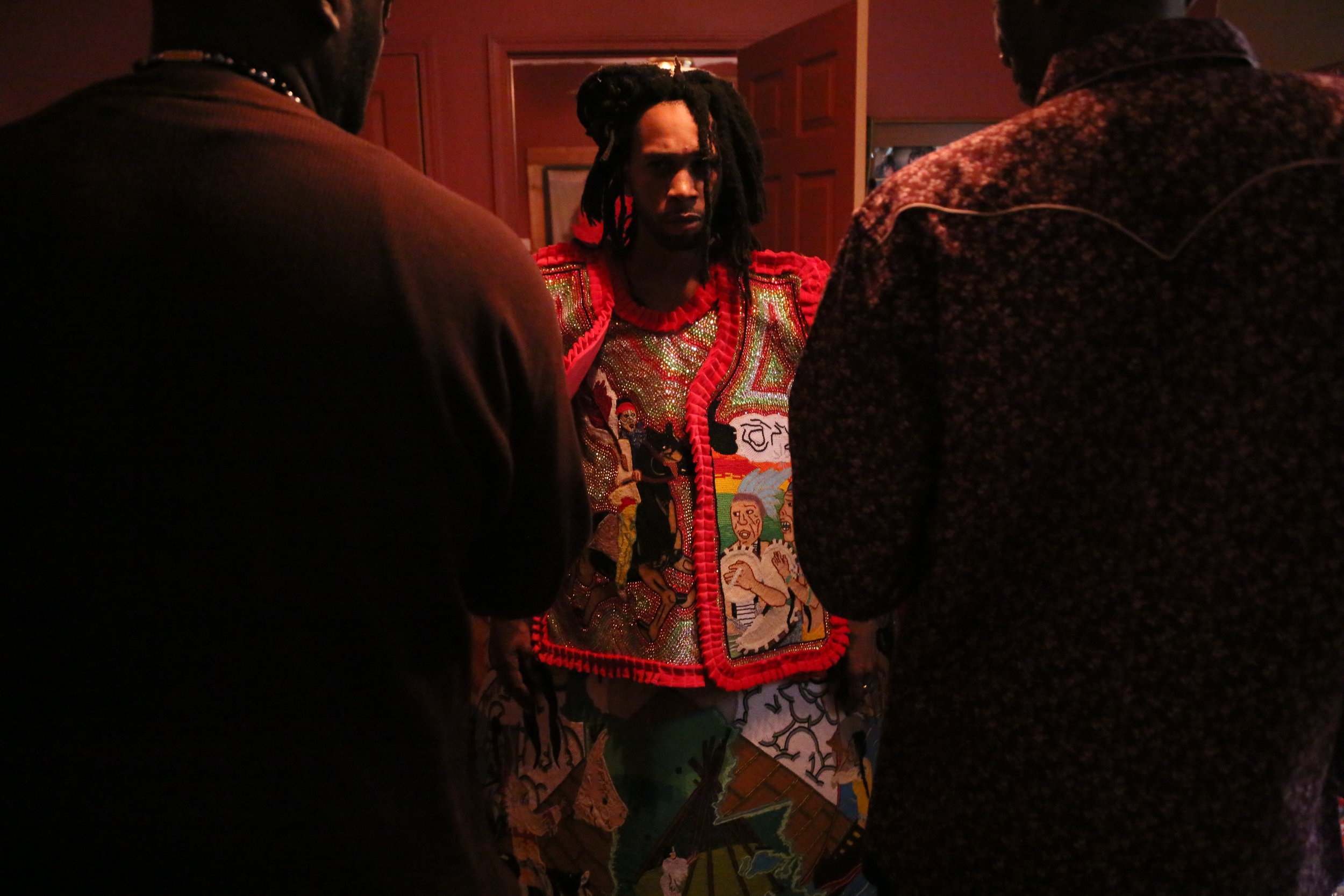
Demond Melancon (b. 1978) works solely with a needle and thread to sew glass beads onto canvas. He began this practice in 1992 when he first became part of the Black Masking Culture of New Orleans, a culture whose roots are woven through more than two centuries of history. Big Chief Demond Melancon is well known for creating massive Suits as a Black Masker. His Suits are sculptural forms based on the size of his body which are composed of intricate, hand-sewn beadwork revealing a collective visual narrative. In 2017, Melancon pioneered an emerging contemporary art practice using the same beading techniques he’s been refining over the past 30 years in the Black Masking Culture.
Melancon’s work has been included in exhibitions at the Victoria & Albert Museum, Art Gallery of New South Wales, International African American Museum, African Diaspora Art Museum of Atlanta, Museum of Contemporary African Diasporan Art, African American Museum in Philadelphia, Halsey Institute of Contemporary Art, Kalamazoo Institute of Arts, Haus der Welt der Kulturen (Berlin), London Design Festival, Biennale of Sydney, Art Miami, Arrival Art Fair, and EXPO Chicago. His work is included in the collections of the Gibbes Museum of Art, International African American Museum, Toledo Museum of Art, Birmingham Museum of Art, and the LSU Museum of Art. In a span of two years, Demond Melancon was honored with the Joan Mitchell Foundation Fellowship in 2023 and the Gibbes Museum and Society 1858's Prize for Contemporary Southern Art in 2024. In 2026, Big Chief Demond Melancon was announced as one of the 110 artists worldwide invited to the 61st International Art Exhibition of La Biennale di Venezia by Koyo Kouoh.
As a self-taught artist, Melancon has been heavily influenced by the teachings of Kerry James Marshall. Often reflecting untold stories from bygone pasts, many of his works honor Black subjects historically excluded from the artistic canon while confronting stereotypical representations of Black identity. The potency of Melancon’s work is reinforced by his deep interest in exploring the possibilities of visual storytelling and redefining the traditions of portraiture. Demond Melancon is one of the few artists to pioneer the use of glass beads as an accepted medium in the larger contemporary arts sector. By reconsidering predominant narratives, Melancon deliberately repositions historically overlooked subjects and reimagines institutional portrayal of the Black subject.
Public Collections
Birmingham Museum of Art
Gibbes Museum of Art
International African American Museum
LSU Museum of Art
Toledo Museum of Art
Curators
James Bartlett (Rumi Missabu)
Kate Chertavian
Cosmin Costinas
Dejay Duckett
Tremaine Emory
Inti Guerrero
Katie Hirsch
Meneesha Kellay
Jody Knowlton
Koyo Kouoh
Larry Ossei Mensah
Jonathan Carver Moore
Dr. Bonaventure Soh Bejeng Ndikung
Dr. Fahamu Pecou
Marie Hélène Pereira
Arthur Roger
Carlos Maria Romero (a.k.a. Atabey)
Jeff Whetstone
Museums & Institutions
African American Museum in Philadelphia
African Diaspora Art Museum of Atlanta
Art Gallery of New South Wales
Backstreet Cultural Museum
Birmingham Museum of Art
Crystal Bridges Museum of American Art
Gibbes Museum of Art
Halsey Institute of Contemporary Art
Haus der Kulturen der Welt
International African American Museum
Kalamazoo Institute of Arts
Lewis Center for the Arts
Logan Center for the Arts
LSU Museum of Art
Museum of the African Diaspora
Museum of Contemporary African Diasporan Art
Museum of Old and New Art
Toledo Museum of Art
Victoria & Albert Museum
Biennales
La Biennale di Venezia
Biennale of Sydney
London Design Festival
Art Fairs & Festivals
Arrival Art Fair
Art Miami
Atlanta Art Fair
EXPO Chicago
Colleges & Universities
College of Charleston
Louisiana State University
Princeton University
Tulane University
University of Chicago
Xavier University of Louisiana
“We make Suits. Not costumes.”
Born and Raised in the Lower Ninth Ward
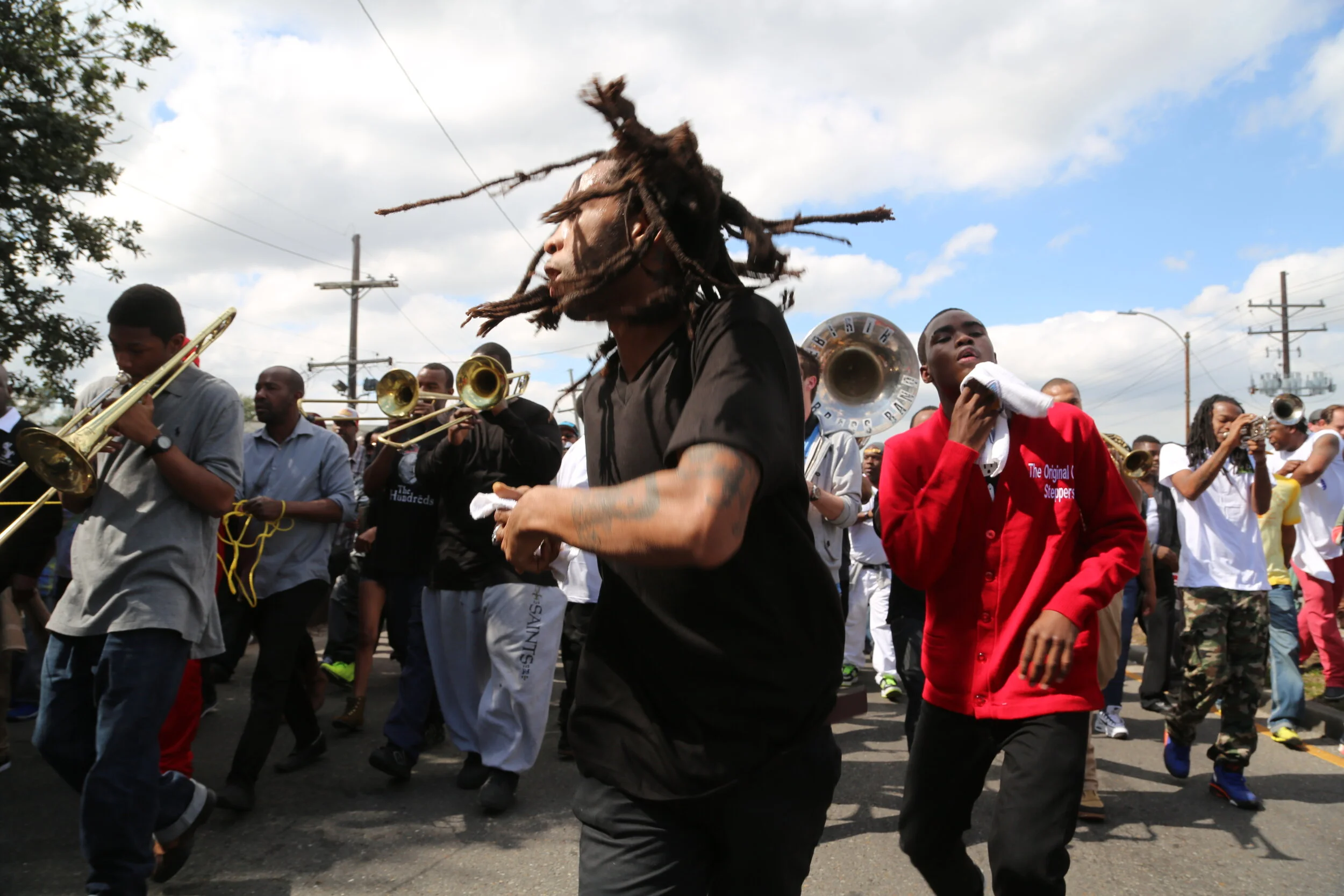
Melancon was born in 1978 and grew up in the Lower Ninth Ward of New Orleans. He was initially taught by a prolific elder named Big Chief Ferdinand Bigard. Melancon went on to study under Nathanial Williams in connection with a 1993 Louisiana Folklife Apprenticeship Grant. Melancon joined the Seminole Hunters and masked as a Spy Boy for over 15 years under Big Chief Keitoe Jones. In 2012, the elders of the Black Masking community declared that Melancon would then be known as Big Chief Demond Melancon of the Young Seminole Hunters, his very own tribe based in the Lower Ninth Ward of New Orleans.
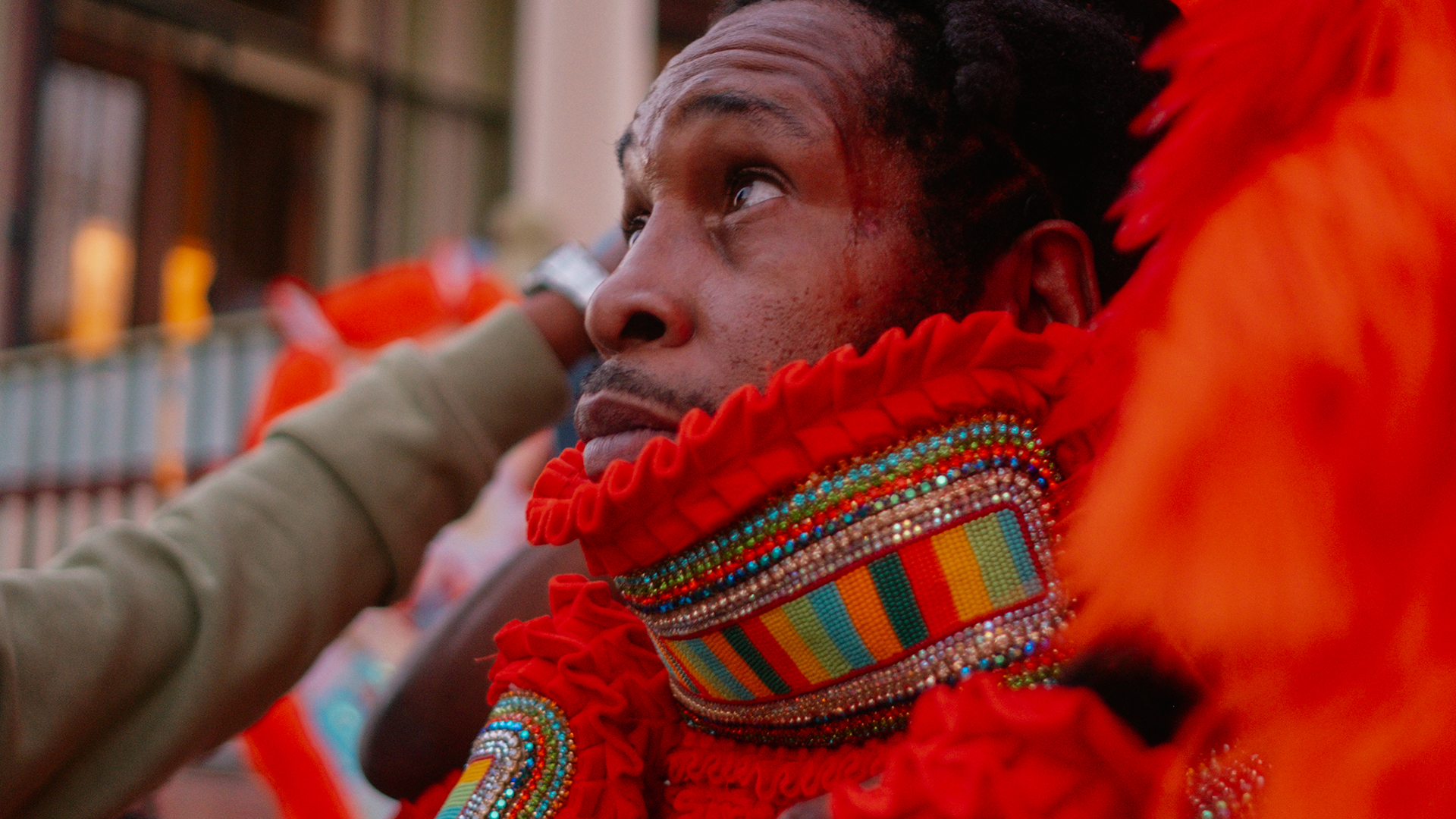
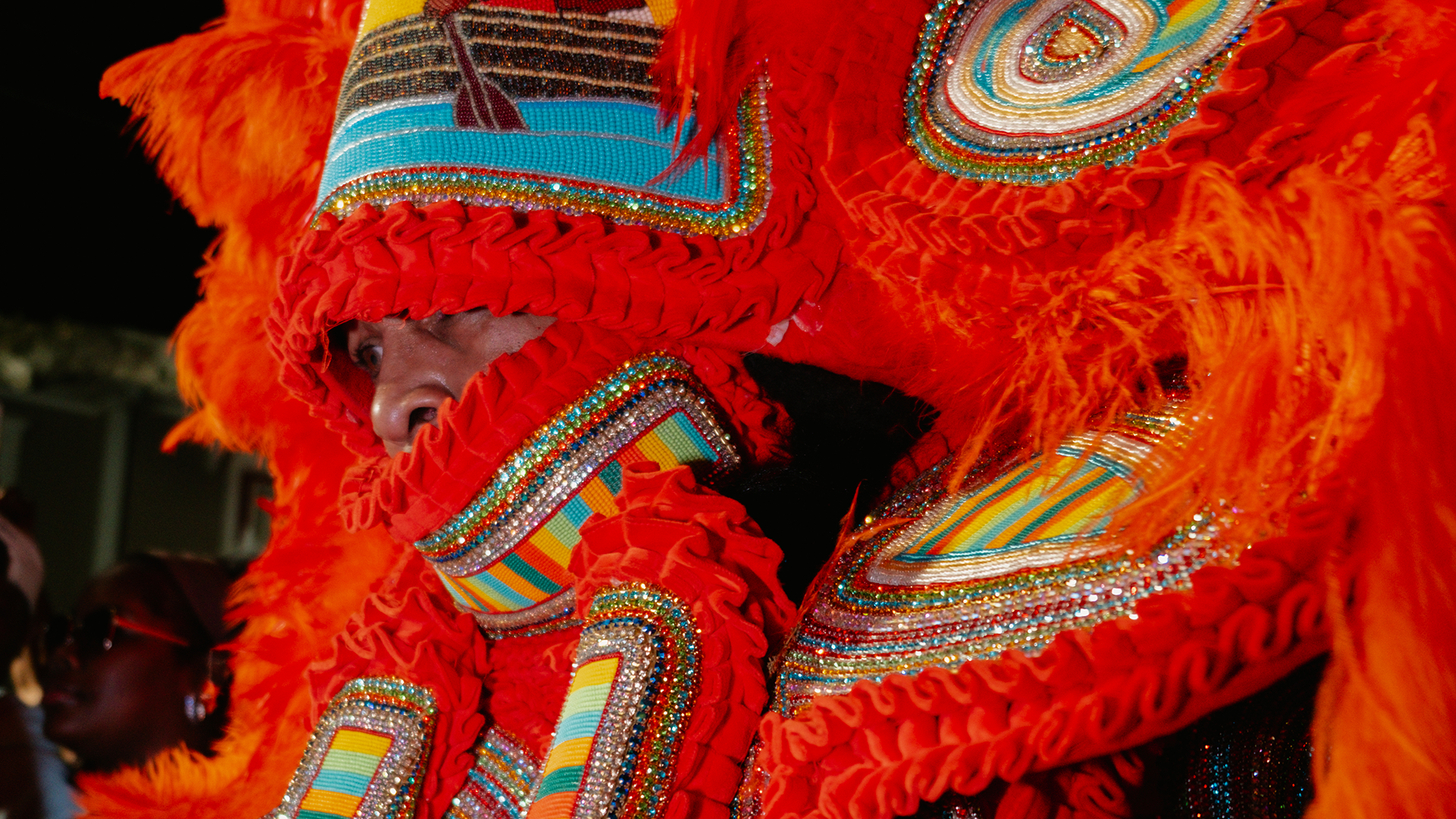
He has been part of the Black Masking Culture of New Orleans since 1992 and second-lining since he began to walk. When Demond was 14 years old, he had the opportunity to learn from several influential elder Big Chiefs. They not only taught him how to sew and bead intricate suits, but also about the history and traditions of the Black Masking Culture of New Orleans, which began over 200 years ago. Prior to the Black Masking elders declaring Demond would become the Big Chief of his very own tribe, he had become very well known as being a fierce Spy Boy for the Seminole Hunters, earning the title of “Spy Boy of the Nation.” Big Chief Demond is world renowned for his meticulous hand-sewn beadwork, use of incredibly small seed beads, and attention to details often combining various types of beads (i.e., opaque, transparent, matte, metallic) and a broad spectrum of colors for effect.
Demond Melancon is Big Chief of the Young Seminole Hunters Based in the Lower Ninth Ward
The Big Chief serves as a cultural leader and symbol of strength for his tribe throughout the year, culminating in his role as the spiritual center at the heart of ceremonial battles on Mardi Gras day. The respect a Big Chief earns is grounded in both the beauty and complexity of his suits and his commitment to the traditions of the Black Masking Culture of New Orleans.
Big Chief Demond Melancon’s Suits are technically extraordinary due to two primary factors: the monumental size of his main aprons, worn from the waist to the ankles, and his use of exceptionally small glass seed beads. His fully beaded aprons often exceed 50 inches in width and are constructed using size 11/0 beads, which measure just 2.1 mm, smaller than what is typically used by other Black Maskers in New Orleans. As a result of this combination of scale and precision, Melancon’s Suits require more than 4,000 hours of hand sewing over one million beads to complete.
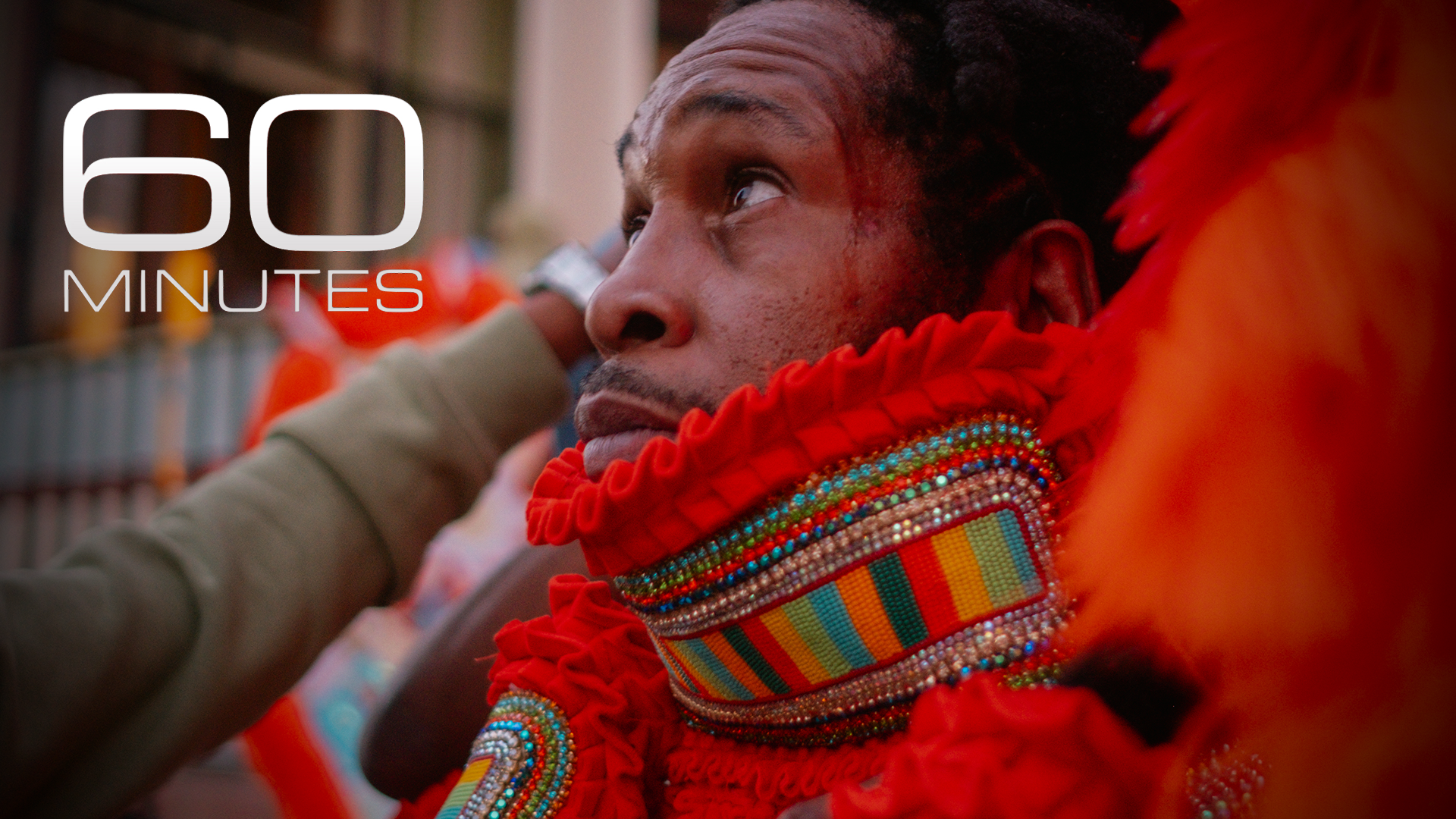
Big Chief Demond Melancon | 60 Minutes, CBS News